


How to Keep Your Fountain Running Smoothly in Early Fall in San Antonio, TX
September in San Antonio is a unique season for outdoor water features. We may start dreaming about cooler fall evenings, but the reality is that early fall often still brings hot afternoons, warm nights, dry stretches, sudden thunderstorms, and plenty of windblown leaves, dust, and pollen. If you have a courtyard fountain, pondless waterfall, bubbling urn, or custom waterscape, this is the time to give it a little attention so it continues running beautifully through the season.
At Artistic Waterscapes LLC, we help San Antonio homeowners keep their fountains looking clean, sounding peaceful, and operating efficiently year-round. Early fall maintenance is especially important because your fountain is transitioning out of the intense summer heat but not yet into true cool-weather conditions. A few simple steps now can prevent pump strain, algae buildup, water loss, and costly repairs later.

Key Takeaways:
- Check and clean your fountain pump regularly in September to remove leaves, seed pods, dust, and algae before they reduce water flow.
- Maintain proper water levels during warm San Antonio afternoons, especially after windy days or dry stretches.
- Use early fall as the ideal time to schedule professional fountain maintenance before heavier leaf drop and cooler weather arrive.
- Watch for changes in sound, splashing, flow pattern, or water clarity, as these can be early signs of pump or balance issues.
Why Early Fall Fountain Care Matters in San Antonio
In many parts of the country, September means crisp air and steady rainfall. In San Antonio, September can still feel like summer. Temperatures often remain high, evaporation continues, and outdoor water features can still experience heavy biological activity. At the same time, the first hints of fall bring new maintenance challenges, including falling leaves, acorns, blossoms, grass clippings, and debris from seasonal storms.
Your fountain is a moving water system, and like any system, it performs best when it is clean and balanced. When debris gets pulled into the pump, it can restrict water flow. When water levels drop too low, the pump may run hot. When algae grows quickly in warm water, your fountain can go from sparkling to murky in just a few days.
The good news is that consistent early fall care does not have to be complicated. With the right routine, you can protect your investment and enjoy your fountain during one of the most pleasant outdoor seasons in South Texas.
Keep the Water Level Consistent
Even though summer is winding down, evaporation is still a major factor in September. Warm afternoons, breezy conditions, and direct sun can lower your fountain’s water level faster than you might expect. If the water level drops below the proper operating point, your pump may begin pulling in air. This can cause sputtering, louder operation, overheating, and premature pump failure.
We recommend checking your fountain water level several times a week during early fall, especially if your fountain is in full sun or exposed to wind. After a hot or gusty day, take a quick look and top off the basin if needed.
- Keep the pump fully submerged at all times.
- Use a garden hose to top off water slowly to avoid stirring up sediment.
- Check for excessive splashing that may be wasting water outside the basin.
- Look for signs of leaks if the water level drops unusually fast.
If you are constantly refilling your fountain, there may be a plumbing issue, liner problem, seal failure, or splash pattern issue. Artistic Waterscapes LLC can inspect the feature and identify whether the water loss is normal evaporation or something that needs repair.
Clean Out Leaves, Seed Pods, and Debris
Early fall in San Antonio often brings windy days and quick-moving storms. Even before major leaf drop begins, live oaks, crepe myrtles, pecan trees, and surrounding landscape plants can shed debris into your fountain. Small organic materials may seem harmless, but once they settle in the basin, they begin to break down and affect water quality.
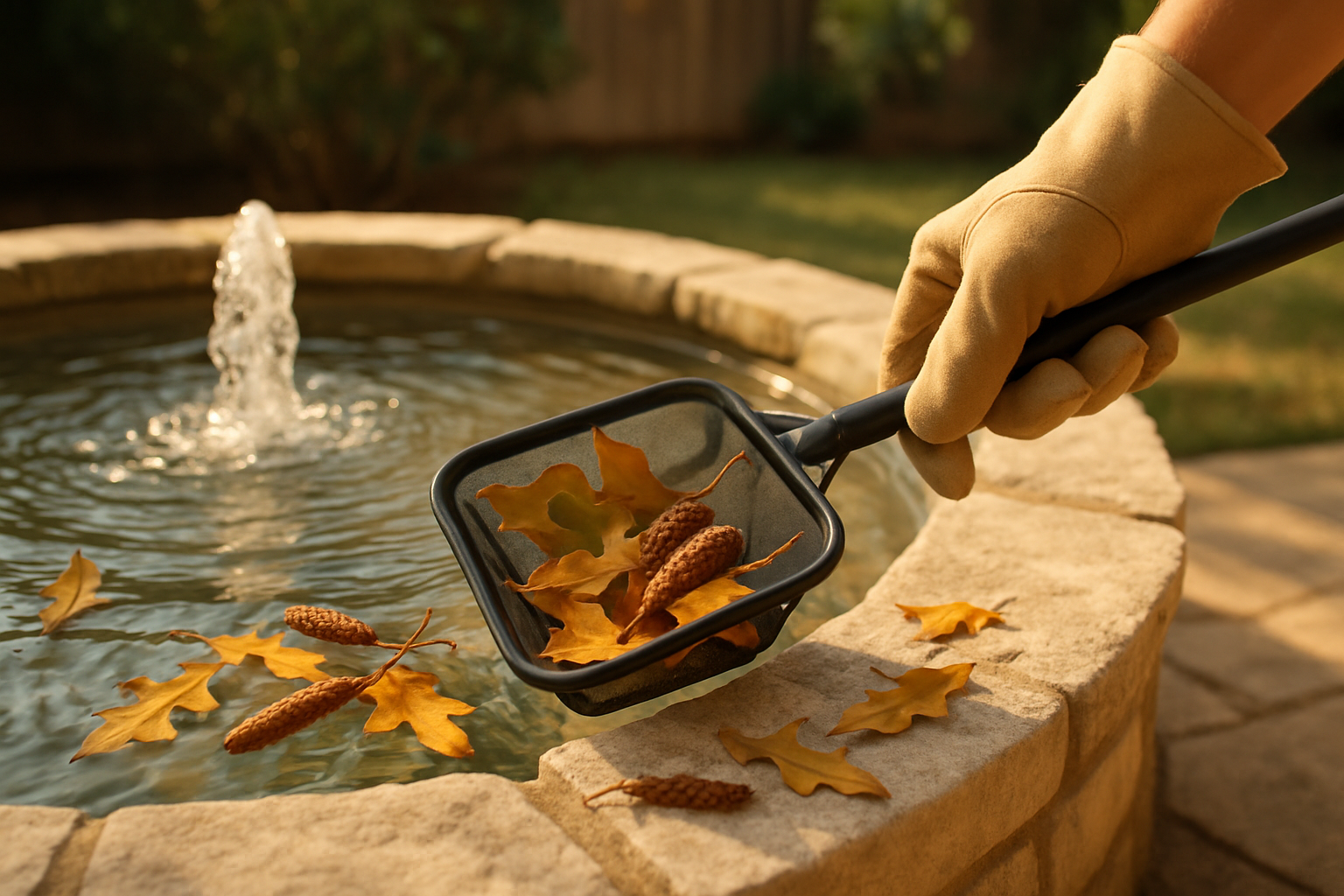
Leaves and plant debris can clog intake screens, slow the pump, stain stone surfaces, and contribute to algae growth. A few minutes of skimming can make a big difference.
- Use a small net to remove floating debris every few days.
- Brush algae or buildup from fountain surfaces before it hardens.
- Remove debris from pump intake areas and grates.
- Trim nearby plants that are dropping material directly into the water.
- After storms, inspect the basin for mud, mulch, and windblown trash.
If your fountain has multiple tiers, narrow channels, or decorative stonework, debris can hide in small spaces and reduce performance. Professional cleaning helps remove buildup from areas that are easy to miss during routine care.
Pay Attention to Your Pump
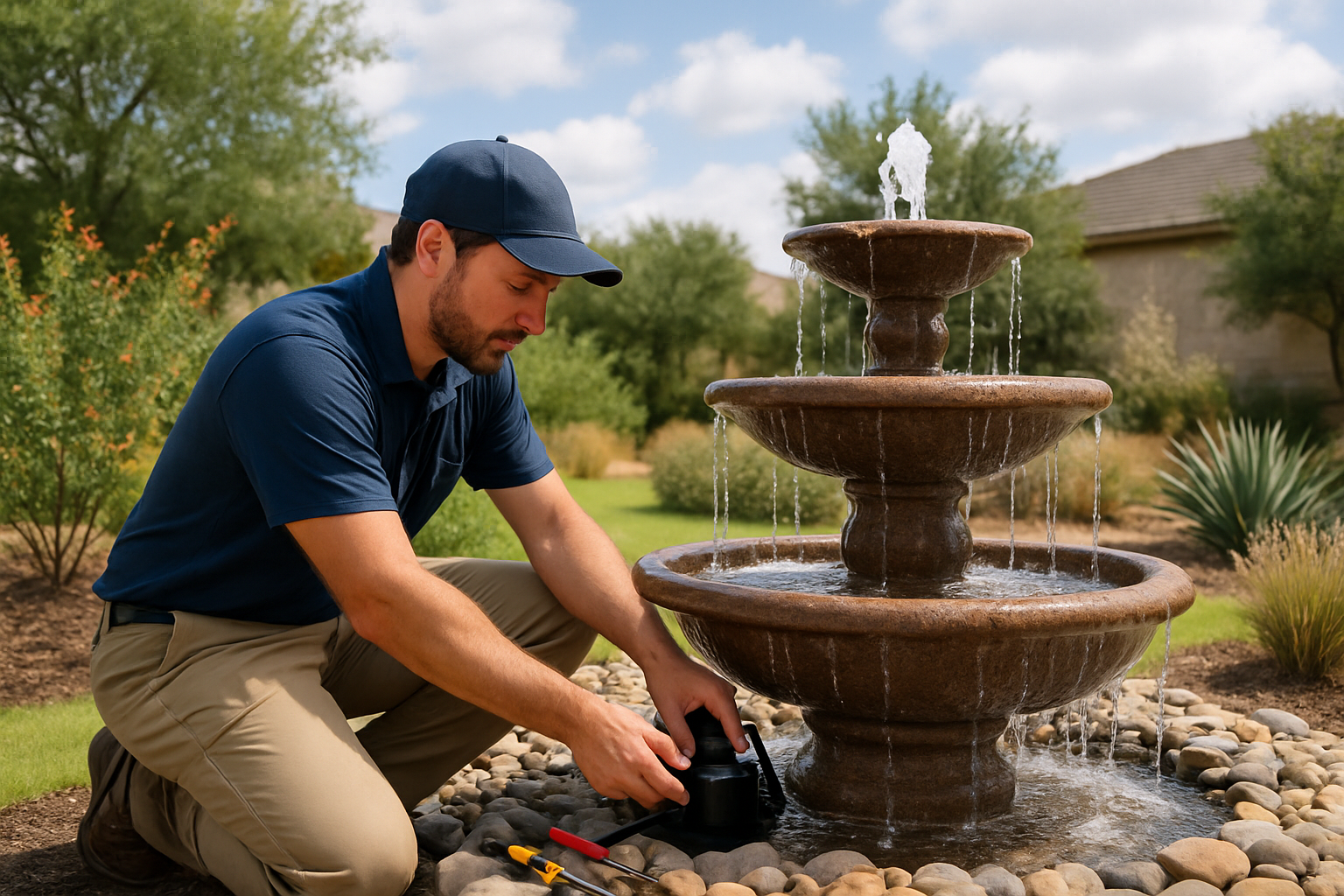
Your fountain pump is the heart of the water feature. In September, it may still be working hard from summer conditions, especially if it has been running daily through extreme heat. Early fall is a smart time to check for signs of pump stress before the issue becomes more serious.
Listen to your fountain. A healthy fountain usually has a smooth, steady water sound. If you hear grinding, rattling, buzzing, or intermittent flow, the pump may be clogged, running low on water, or nearing the end of its service life.
Watch the flow pattern as well. If your fountain normally has a strong cascade but now looks weak or uneven, debris may be blocking the pump, tubing, or spillway. Sometimes the fix is simple. Other times, the system needs a more thorough inspection.
“Artistic Waterscapes came out when our courtyard fountain started making a loud humming noise. They found debris packed around the pump, cleaned everything, adjusted the flow, and had it running beautifully again the same day.”
— Local homeowner in San Antonio, TX
Control Algae Before It Takes Over
Warm water, sunlight, and organic debris create ideal conditions for algae. Since September in San Antonio can still bring plenty of heat, algae may continue growing well into fall. A little green film is common, but heavy algae buildup can make your fountain slippery, cloudy, and unattractive.
The best algae control strategy is prevention. Keep debris out, maintain water movement, and clean surfaces regularly. If you use any water treatments, make sure they are safe for your specific fountain materials, surrounding landscape, pets, and any wildlife that may visit.
Avoid harsh chemicals unless you know they are appropriate for your water feature. Some products can damage stone, discolor finishes, harm plants, or shorten pump life. When in doubt, ask a professional before adding anything to the water.
Check Splash, Flow, and Fountain Placement
San Antonio’s early fall winds can change the way your fountain behaves. A fountain that seemed perfectly balanced in July may start splashing outside the basin when the wind picks up in September. Over time, that constant splash-out can lower the water level, stain surrounding hardscape, and waste water.
Look at your fountain during different times of day. Is water landing where it should? Is one side splashing more than the other? Are plants growing into the flow path? Has the fountain shifted slightly due to soil movement or settling?
Small adjustments can make a big difference. Leveling a fountain, adjusting pump flow, repositioning stones, or clearing a spillway can improve both appearance and efficiency.
Prepare for Heavier Fall Leaf Drop
September is also the time to think ahead. Once deeper fall arrives, more leaves and acorns can drop into your fountain. If your property has mature trees, especially live oaks, pecans, sycamores, or elms, your fountain may need more frequent attention over the next few months.
Consider scheduling a professional maintenance visit before debris becomes overwhelming. This allows us to clean the system, inspect the pump, check water flow, and make recommendations for protecting your fountain during the rest of the season.
Why Choose Artistic Waterscapes LLC?
At Artistic Waterscapes LLC, we are not just maintaining fountains—we are caring for outdoor spaces that bring peace, beauty, and value to your home. As a San Antonio-based company, we understand the local climate, water conditions, landscaping styles, and seasonal challenges that affect fountains and water features in our area.
Our team brings hands-on experience with custom fountains, pondless waterfalls, decorative water features, ecosystem ponds, and outdoor living enhancements. We know how limestone, sun exposure, hard water, algae, pumps, and native plant debris interact in South Texas environments.
When you choose Artistic Waterscapes LLC, you get:
- Local knowledge of San Antonio weather and seasonal maintenance needs.
- Professional inspection of pumps, basins, plumbing, flow, and water quality.
- Careful cleaning that protects stone, concrete, ceramic, and decorative finishes.
- Honest recommendations instead of unnecessary upsells.
- Reliable service from a company that treats your waterscape like a work of art.
Whether your fountain needs a seasonal cleaning, pump repair, flow adjustment, algae control, or a complete refresh, we are here to help. We take pride in creating and maintaining water features that look natural, function properly, and invite you to spend more time outdoors.
Schedule Your Early Fall Fountain Service
Early fall is one of the best times of year to enjoy your fountain in San Antonio. The evenings become more comfortable, patios become more inviting, and the sound of moving water adds a relaxing touch to your outdoor space. With a little maintenance now, your fountain can continue running smoothly through September and beyond.
If your fountain is looking cloudy, running weak, making noise, losing water, or simply due for seasonal care, contact Artistic Waterscapes LLC. We would be happy to inspect your water feature, clean it properly, and help you keep it beautiful for the months ahead.
Artistic Waterscapes LLC proudly serves San Antonio, TX and surrounding areas with fountain maintenance, water feature care, and custom waterscape solutions designed for South Texas living.
