


How to Keep Your Fountain Water Clear in Late Summer in San Antonio, TX
Late summer in San Antonio can be tough on outdoor fountains. By August, we’re dealing with long stretches of intense sun, high afternoon temperatures, warm nights, dust, pollen, and the occasional pop-up storm that washes debris into water features. If your fountain looked clear and beautiful in spring but now seems cloudy, green, foamy, or full of mineral buildup, you’re not alone.
At Artistic Waterscapes LLC, we help homeowners and businesses throughout San Antonio keep their fountains, ponds, and custom waterscapes looking clean, balanced, and inviting year-round. Late summer maintenance is especially important because warm water creates the perfect environment for algae growth, evaporation concentrates minerals, and pumps often work harder than usual.
The good news? With the right care routine, you can keep your fountain water clear, protect your equipment, and enjoy a beautiful outdoor focal point even during the hottest part of the year.

Key Takeaways:
- Clean debris frequently in August to prevent algae, clogged pumps, and cloudy water.
- Maintain proper water levels because San Antonio heat causes rapid evaporation that can damage fountain pumps.
- Use the right water treatments to control algae and mineral buildup without harming your fountain materials.
- Schedule professional maintenance if your fountain has persistent cloudiness, scale, low flow, or recurring algae problems.
Why Fountain Water Gets Cloudy in August
San Antonio’s late-summer climate creates a few unique challenges for fountains. High heat accelerates biological activity in the water, meaning algae can bloom quickly. Direct sun exposure also warms the water and encourages green growth on bowls, walls, rocks, and basins. Even if your fountain is shaded for part of the day, the surrounding air temperature can still keep the water warm enough for algae to thrive.
Evaporation is another major factor. During August, fountain water levels can drop quickly, sometimes noticeably in just a day or two. As water evaporates, minerals such as calcium and magnesium become more concentrated. This can lead to white scale, cloudy water, stains, and buildup around the pump.
Common causes of cloudy or green fountain water in late summer include:
- Warm water temperatures that encourage algae growth
- Low water levels caused by evaporation
- Leaves, grass clippings, dust, pollen, and organic debris
- Hard water mineral buildup, which is common in the San Antonio area
- Poor circulation due to a clogged or undersized pump
- Too much direct sunlight on the fountain basin
- Improper or inconsistent water treatment
Start with a Consistent Cleaning Routine
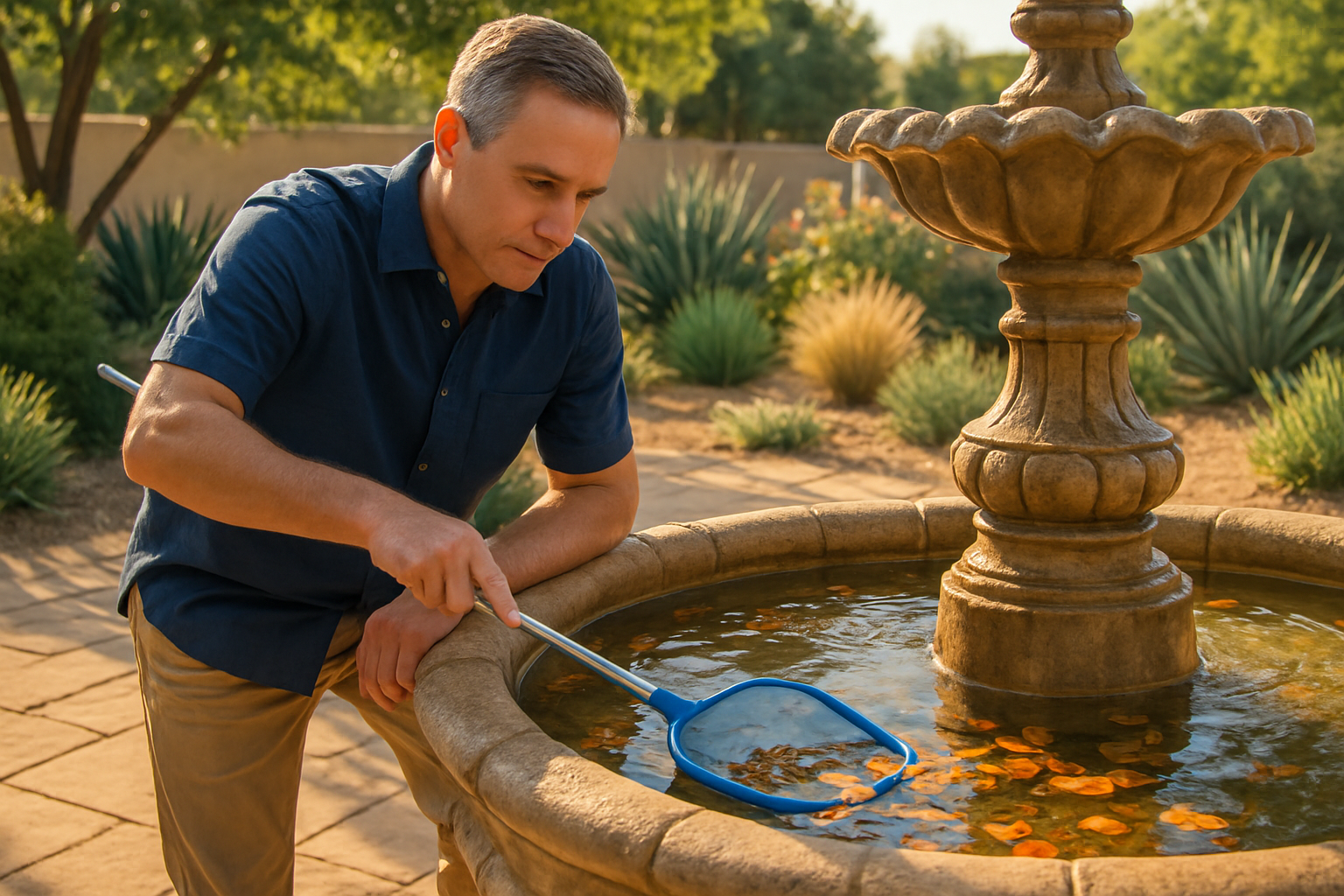
The best way to keep your fountain water clear is to stay ahead of debris. In late summer, debris can break down quickly in warm water. Once it begins to decay, it feeds algae and bacteria, leading to discoloration, odors, and slime on fountain surfaces.
For most fountains in San Antonio, we recommend checking the water feature several times per week in August. This doesn’t always mean a deep cleaning. Often, a quick inspection and debris removal are enough to prevent bigger problems.
A simple late-summer cleaning routine includes:
- Skim leaves, seed pods, insects, and grass clippings from the water surface.
- Wipe algae from visible surfaces before it spreads.
- Rinse or clean the pump intake to maintain proper water flow.
- Check for standing debris in corners, bowls, or rock pockets.
- Top off the water level before it drops below the pump intake.
If your fountain is located near live oaks, crepe myrtles, ornamental grasses, or high-traffic landscape beds, you may need to clean it more often. Windy afternoons and lawn maintenance days can add a surprising amount of debris to the water.
Keep Water Levels Stable During San Antonio Heat
One of the most overlooked parts of fountain maintenance is maintaining the correct water level. In August, evaporation can be significant, especially for shallow basins, spillways, disappearing fountains, and water features with wide surface areas.
When the water level gets too low, the pump may begin to suck in air. This can cause sputtering, low flow, unpleasant noise, overheating, or permanent pump damage. A pump that runs dry for even a short period of time may fail, especially during the hottest part of the day.
As a general rule, your fountain pump should always be fully submerged unless it is specifically designed otherwise. If you’re unsure where the correct water level should be, Artistic Waterscapes LLC can inspect the system and show you exactly what to watch for.
For busy homeowners, automatic fill valves can be a smart upgrade. These systems help maintain a consistent water level and reduce the risk of pump damage during extreme heat. This is especially helpful for vacation homes, commercial properties, and fountains that receive direct afternoon sun.
Use the Right Water Treatments
Water treatments can make a big difference, but it’s important to use the right products for your specific fountain. Not every chemical or additive is appropriate for every material or system. Some harsh cleaners can damage natural stone, concrete, tile, copper, seals, finishes, or pump components.
For most decorative fountains, treatments may include algae inhibitors, beneficial bacteria, scale reducers, or clarifiers. The best choice depends on what is causing the problem. Green water usually points to algae. White crust or cloudy water may indicate hard water minerals. Foam may suggest organic buildup, soap contamination, or improper treatment levels.
We recommend avoiding household bleach unless a professional has advised it for a specific situation. While bleach can kill algae, it can also damage finishes, harm nearby plants, create strong odors, and shorten the life of certain pump components if used incorrectly.
“Once Artistic Waterscapes got our fountain on the right maintenance schedule, the water stayed clear even through the hottest part of August. We stopped fighting algae every weekend and finally got to enjoy our courtyard again.”
— Local Artistic Waterscapes LLC customer, San Antonio, TX
Improve Circulation and Filtration
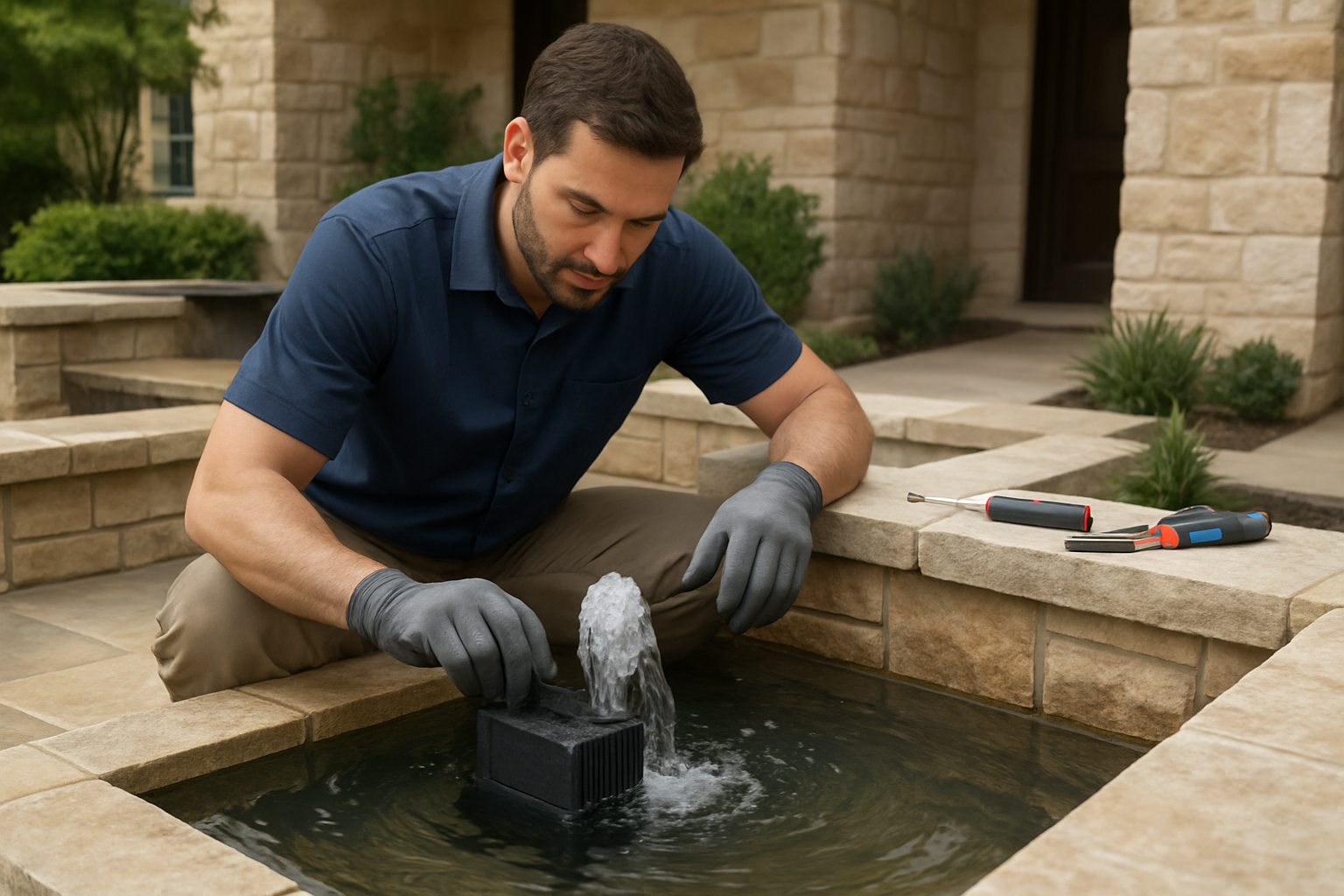
Clear water depends on movement. Stagnant or slow-moving water is much more likely to develop algae, mosquitoes, odors, and debris buildup. If your fountain flow has weakened over time, your pump may be clogged, undersized, aging, or struggling against mineral buildup.
Signs your fountain may have circulation problems include:
- Water trickles instead of flowing evenly
- The pump makes grinding, humming, or sputtering sounds
- Algae returns quickly after cleaning
- Debris collects in still areas of the basin
- Water appears cloudy even after treatment
- The fountain loses water from splashing caused by uneven flow
Sometimes the solution is as simple as cleaning the pump intake and tubing. In other cases, the fountain may benefit from a better pump, adjusted flow control, improved plumbing, or added filtration. At Artistic Waterscapes LLC, we evaluate the full system instead of just treating the symptom. That approach helps our customers avoid repeat problems and unnecessary product purchases.
Control Sun Exposure Where Possible
In San Antonio, direct afternoon sun is one of the biggest contributors to algae growth. While you may not be able to move a built-in fountain, you can often reduce heat stress with smart landscape adjustments.
Consider adding shade from native or well-adapted plants, patio umbrellas, pergolas, or nearby container arrangements. Even partial afternoon shade can help keep water temperatures lower and slow algae growth. Just be careful not to create a new debris problem by placing heavy-shedding plants directly above the fountain.
Good plant choices around fountains often include drought-tolerant, low-litter landscape options that can handle South Texas conditions. The goal is to create a beautiful setting that supports the fountain rather than constantly dropping leaves, blooms, or seed pods into the water.
Watch for Hard Water Scale
San Antonio is known for hard water, and fountains show it quickly. White mineral deposits can form along edges, spillways, rock surfaces, and tile lines. In late summer, evaporation makes scale worse because minerals become more concentrated as the water level drops.
Mineral buildup is more than a cosmetic issue. It can restrict water flow, clog tubing, reduce pump efficiency, stain fountain materials, and make surfaces more attractive to algae. Regular cleaning and proper water treatment can help manage scale before it becomes difficult to remove.
If you already have heavy white crusting, it’s best to call a professional. Aggressive scraping or acidic cleaners can permanently damage stone, concrete, grout, and decorative finishes. Artistic Waterscapes LLC uses methods appropriate for your fountain’s material and condition.
Why Choose Artistic Waterscapes LLC?
When you hire Artistic Waterscapes LLC, you’re not just getting someone to clean a fountain. You’re working with a local San Antonio waterscape company that understands our climate, water conditions, materials, and seasonal maintenance challenges.
We know what August heat does to outdoor water features in South Texas. We understand how fast evaporation can drop a basin level, how hard water affects pumps and stone, and how quickly algae can take over when circulation or treatment is off balance.
Customers choose Artistic Waterscapes LLC because we provide:
- Local expertise specific to San Antonio weather and water conditions
- Custom maintenance recommendations based on your fountain’s design, location, and materials
- Professional troubleshooting for algae, cloudy water, leaks, pump issues, and mineral buildup
- Reliable service that helps protect your investment and keep your water feature beautiful
- Design-minded care from a company that values both function and visual appeal
Whether you have a small courtyard fountain, a large estate water feature, a commercial entry fountain, or a custom pondless waterscape, we can help you keep it operating properly and looking its best.
Let Us Help You Enjoy Your Fountain Again
Your fountain should be a relaxing focal point, not another stressful maintenance chore. During late summer in San Antonio, clear water takes consistency, the right products, proper circulation, and an understanding of local conditions. If you’re tired of fighting algae, cloudy water, mineral buildup, or pump problems, Artistic Waterscapes LLC is here to help.
Contact Artistic Waterscapes LLC in San Antonio, TX to schedule fountain maintenance, troubleshooting, cleaning, repair, or a professional evaluation. We’ll help you protect your investment and keep your water feature clear, beautiful, and ready to enjoy through August and beyond.
